
The story of medical science is the story of humanity’s effort to understand, heal, and preserve life. From the earliest healers mixing herbs under the desert sun to robotic surgeons operating through fiber-optic instruments, the field of medicine has evolved over millennia — shaped by discoveries, disasters, and determination. Its history is not just a chronicle of scientific progress but a reflection of our desire to overcome suffering and extend the limits of health and longevity.
Ancient and Classical Beginnings
Medicine has existed in some form for as long as human civilization itself. In ancient Egypt, healers like Imhotep, who lived around 2600 BCE, recorded detailed observations of wounds, fractures, and diseases. Egyptian papyri such as the Ebers and Edwin Smith texts reveal an early systematic approach to diagnosis and treatment, mixing spiritual beliefs with practical knowledge.
Across the deserts of Mesopotamia, Babylonian physicians compiled clay tablets describing symptoms, remedies, and even the first legal codes for medical malpractice in the famous Code of Hammurabi. Illness was often seen as a punishment from the gods, yet these early societies were already observing patterns and experimenting with natural cures.
In Greece, medicine began to separate from superstition. Hippocrates, born around 460 BCE, is often called the “Father of Medicine” because he emphasized observation, reasoning, and ethical practice. His approach laid the foundations for the Hippocratic Oath — still recited by many physicians today. A few centuries later, Galen, a Greek doctor serving the Roman Empire, expanded on these ideas through dissections and careful study of animal anatomy. His theories dominated Western medicine for more than a thousand years.
Meanwhile, in the Islamic Golden Age, scholars such as Al-Razi (Rhazes) and Ibn Sina (Avicenna) preserved and expanded upon Greek and Roman medical knowledge. Avicenna’s Canon of Medicine, written in the 11th century, was used in both Islamic and European universities for centuries. These thinkers brought rigor, experimentation, and organization to the practice of healing.
From the Middle Ages to the Renaissance
During Europe’s Middle Ages, medical progress slowed as religious explanations of disease overshadowed scientific reasoning. Yet, in hospitals and monasteries, basic caregiving and record-keeping quietly advanced. Islamic medicine, on the other hand, continued to flourish, inspiring later European scholars when classical texts were reintroduced through translation.
The Renaissance ignited a renewed curiosity about the human body. Dissection, once forbidden, became accepted, and artists like Leonardo da Vinci drew anatomy with precision unmatched for centuries. In 1543, Andreas Vesalius published De Humani Corporis Fabrica, a revolutionary anatomy book that corrected many of Galen’s mistakes and changed how doctors studied the body. A century later, William Harvey described how blood circulates through the body, proving that the heart acts as a pump — a discovery that overturned centuries of misunderstanding and opened the door to modern physiology.
The Birth of Modern Medicine
The 19th century was a turning point. For the first time, the invisible causes of disease were understood. The work of Louis Pasteur and Robert Koch revealed that germs, not “bad air” or imbalance of humors, were responsible for infections. Their discoveries gave rise to vaccines, sterilization, and modern hygiene. Joseph Lister applied these ideas in surgery, introducing antiseptic techniques that dramatically reduced deaths from infection.
At the same time, the discovery of anesthesia transformed surgery. Before the mid-1800s, operations were performed without pain relief, and speed was the surgeon’s greatest skill. Ether and chloroform changed everything, allowing longer, safer, and more precise operations.
New diagnostic technologies also began to emerge. In 1895, Wilhelm Röntgen accidentally discovered X-rays, allowing doctors to see inside the human body for the first time without cutting it open. This remarkable invention opened an entirely new era of medical imaging.
The Twentieth Century: Medicine Becomes High-Tech
As the 20th century unfolded, medicine was revolutionized by science, technology, and industry. The discovery of penicillin by Alexander Fleming in 1928 ushered in the age of antibiotics, saving millions of lives and transforming once-deadly infections into treatable conditions. Vaccines expanded beyond smallpox to combat polio, measles, influenza, and many other diseases.
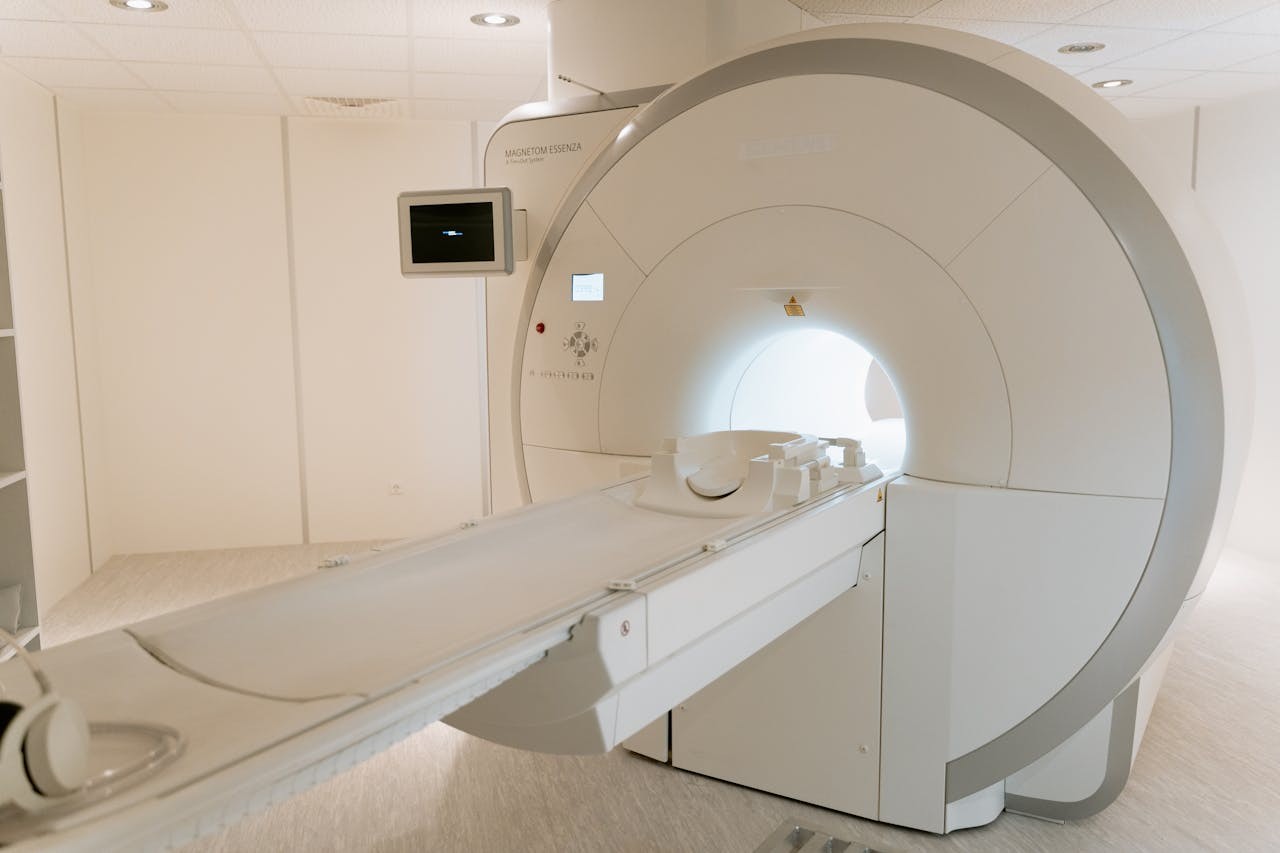
Radiology evolved rapidly. From the early X-ray machines came the computed tomography (CT) scanner, developed in the 1970s by Godfrey Hounsfield and Allan Cormack, which allowed doctors to see cross-sectional images of organs and tissues. A few years later, Raymond Damadian helped pioneer magnetic resonance imaging (MRI), which uses magnetic fields and radio waves to visualize soft tissues in astonishing detail. These machines redefined how diseases are detected and monitored.
The 20th century also brought major improvements in surgical techniques. From open-heart surgery to organ transplantation, physicians learned to operate on the most delicate organs with precision and safety. The invention of dialysis machines saved patients with kidney failure, while artificial pacemakers kept failing hearts beating. By the century’s end, robotic and minimally invasive surgeries were becoming common, allowing faster recovery and fewer complications.
At the same time, medicine became more preventive and data-driven. Public health measures — clean water, sanitation, vaccination, and nutrition — had an even greater impact on life expectancy than most drugs or surgeries. Understanding that disease prevention is as crucial as cure became one of the great insights of modern medicine.
The Scientists Behind the Progress
The evolution of medical science has been guided by visionary minds. Imhotep, Hippocrates, Galen, and Avicenna laid its early philosophical and anatomical foundations. Harvey explained circulation; Jenner developed the first vaccine; Pasteur and Koch founded microbiology; and Lister proved that cleanliness could save lives. Fleming’s penicillin, Hounsfield’s CT scanner, and Damadian’s MRI represent the bridge to our modern era of technological medicine. Each breakthrough built upon the last, forming a continuous chain of discovery that connects ancient healers to modern biomedical engineers.
The Modern Era: Digital, Genetic, and Global
Today, medicine is an intricate web of biology, technology, and data. The mapping of the human genome at the start of the 21st century has opened the door to personalized treatments, genetic testing, and gene therapies. Cancers that were once universally fatal are now treated with targeted drugs or immunotherapies that harness the body’s own immune system. Artificial intelligence assists radiologists in interpreting scans and helps doctors predict disease risks based on genetic and environmental factors.
Digital medicine and telehealth are transforming accessibility. Patients can consult doctors through their phones, and wearable devices monitor heart rates, oxygen levels, and sleep patterns in real time. In the developing world, such technology offers unprecedented potential to bridge gaps in access and expertise.
The COVID-19 pandemic demonstrated both the vulnerabilities and strengths of modern medicine. Within months of identifying the new virus, scientists had developed mRNA vaccines — a technology decades in the making but never before used at such scale. This achievement underscored how far medical science has come since the days of bleeding and herbal poultices.
The Cost of Health: A Global Industry
Medicine is not only a science; it is also a vast global industry. According to recent estimates, global health spending now exceeds 9.8 trillion US dollars annually — around 10 percent of the world’s total GDP. Wealthier countries typically spend thousands of dollars per person each year on healthcare, while lower-income nations spend far less.
The medical technology sector alone — encompassing machines like MRI scanners, laboratory analyzers, and surgical robots — accounts for nearly eight percent of healthcare spending in Europe. The average European now consumes about €300 worth of medical technology per year, though costs and access vary widely across nations.
In contrast, countries such as Laos face more limited resources. Health expenditure there remains modest, with recent figures showing about 40 US dollars spent per person in 2022. That represents roughly two to three percent of national GDP, much lower than global averages. The government’s share of that spending is small, around 0.6 percent of GDP. Despite these challenges, Laos has made progress in expanding rural clinics, improving maternal care, and strengthening vaccination programs. International aid, partnerships, and local training continue to play vital roles in improving health outcomes.
Looking Forward
Medicine today stands at an extraordinary crossroads. On one hand, the tools available to doctors — from genetic sequencing to robotic surgery — are more powerful than ever before. On the other, rising costs, inequality, and overreliance on technology present new challenges. The world’s wealthiest countries struggle with the burden of chronic diseases and aging populations, while poorer nations still battle infectious diseases and lack of access to basic care.
The next chapter in medical science will likely focus on integration: uniting biology, data science, and public health. The goal will not just be to cure, but to prevent; not merely to treat, but to understand each patient’s unique biology and environment. The lessons of history show that progress in medicine has always depended on curiosity, compassion, and collaboration.
From ancient Egyptian healers to the developers of AI-driven diagnostic systems, each generation of medical thinkers has sought the same goal — to relieve suffering and extend the gift of life. As long as humanity continues to pursue that goal, the science of medicine will continue to evolve, shaping a future in which health and knowledge walk hand in hand.
