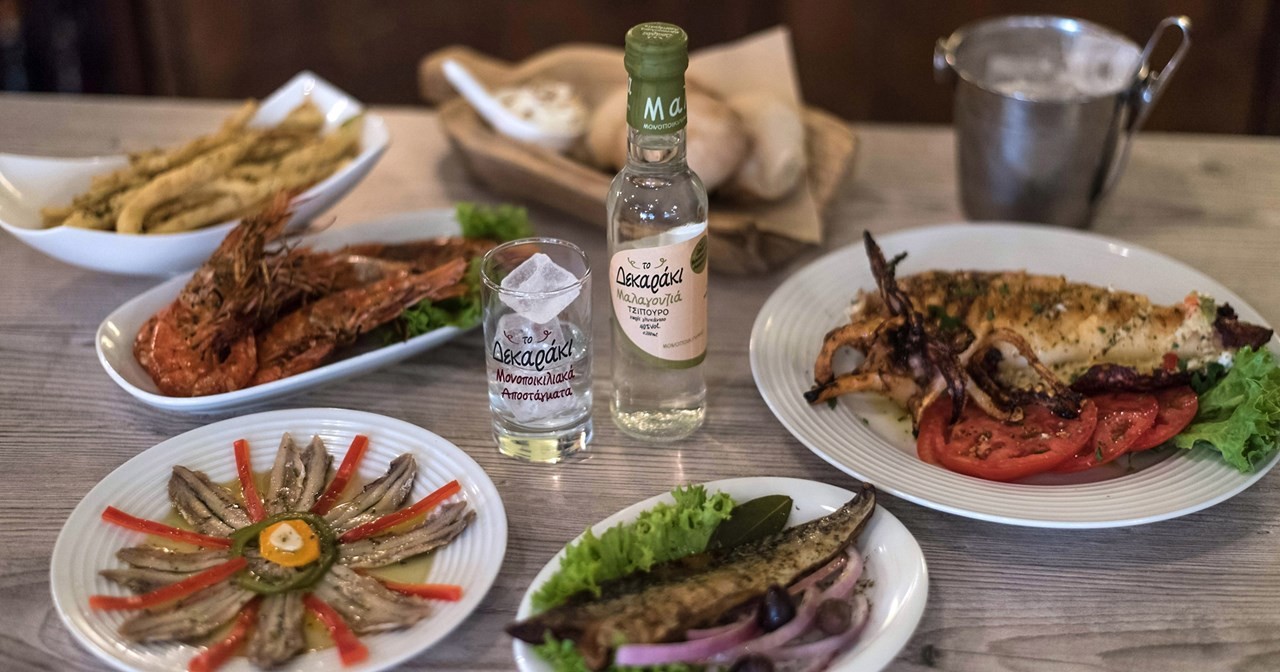

Greek spirits are often associated with ouzo or retsina, but any true connoisseur will tell you that tsipouro is one of Greece’s most authentic distilled delights. It is a drink closely tied to viticulture, terroir, rural life, and convivial tables. In what follows I explore how tsipouro is made, where it came from, which producers are best known today, and how to serve it alongside favorite Greek dishes.
From grape skins to spirit — how tsipouro is produced
Tsipouro is, fundamentally, a pomace brandy — that is, it arises from the residue left behind after grapes are pressed for wine. In Greek, that residue is the “marc” (skins, seeds, some pulp and stems). In mainland Greece, tsipouro is typically double-distilled; on Crete a related spirit called tsikoudia (or “raki”) is often distilled once.
After the grapes are pressed, the leftover marc is collected and allowed to ferment (or in some cases is already fermenting). Some producers remove free must or wine and distill only the solid residue; others use more of the pulp. The fermented marc is fed into small pot stills (often copper or copper-inox hybrids). The first distillation produces a crude distillate (“suma” or “raw spirit”), which is then refined. During the second distillation, distillers discard the heads (the first volatile fraction) and tails (less desirable fraction) and keep the “heart,” which offers the cleanest aromas and flavor.
The spirit is then diluted to yield a bottling strength, often around 40–45 % alcohol by volume. In many cases tsipouro is not aged in wood but rests in inert tanks (stainless steel) to settle and mellow. Some producers experiment with barrel aging to lend complexity, though aged tsipouro remains a niche style.
In parts of northern Greece — notably Macedonia and Thessaly — distillers sometimes add anise (or other aromatics) during distillation to create an anise-flavored tsipouro, which evokes flavors akin to ouzo while preserving the grape base.
From a regulatory perspective, tsipouro is a protected geographical indication under European law; Greek producers have established labels such as “Tsipouro of Macedonia” or “Tsipouro of Thessaly.”
A spirit steeped in history and tradition
The roots of tsipouro lie deep in Greek agrarian and monastic life. Its common origin story traces back to the 14th century, when monks on Mount Athos began distilling grape residues as a way to avoid waste and perhaps supplement monastic needs.
Over time the technique disseminated to surrounding regions: Thessaly, Epirus, Macedonia, and eventually into many rural villages across Greece. For centuries, it was made locally (at home or in village stills) and consumed among family and neighbors — a humble, rustic spirit rather than a commercial product.
Under Ottoman rule and in the early modern era, commercial sale of tsipouro was heavily restricted. Only limited tonnage and small producers had rights to distill and sell. It wasn’t until the late 20th century that the Greek state liberalized these restrictions. In 1988, a law allowed bottling and wider commercial distribution of tsipouro, which catalyzed its transition from backyard beverage to recognized spirit.
Since then, tsipouro has experienced a renaissance. Small distillers, spirit enthusiasts, and bar communities have revived its artisanal side; moreover, modern branding and quality control have lifted it from “moonshine” territory to a spirit worthy of tasting and gifting.
Among the leading names: 15 notable tsipouro brands
While Greece has many small local producers, some brands have gained national or international renown. Below is a curated survey of producers you might seek out (in no strict ranking). Some emphasize purity, others aromatics or aged styles.
- Tsililis — Based in Thessaly, Tsililis is perhaps among the most emblematic bottlers of tsipouro. They produce both non-anise and anise versions, and were among the first to bottle tsipouro in Thessaly.
- Babatzim — A historic distillery producing both anise and non-anise tsipouro, with aromatic complexity.
- Apostolaki / Apostolakis — Hailing from Volos / Thessaly, known for refined, artisanal tsipouro bottlings.
- O/PURIST — A newer, innovation-driven label created by a collective of Greek bartenders. It blends tradition with bar culture, often used as a base for cocktails.
- Dorodouli — A distillery in Thessaloniki combining ancestral methods and modern flair; their tsipouro has gained export attention.
- Katogi Averof — Known in wine circles but also active in Greek distillates (see mentions among popular brands).
- Dekaraki — A local label often cited by Greek retailers.
- Idoniko (Idoniko) — An anise-flavored style that sometimes straddles the boundary with ouzo; often counted among top Greek spirits.
- Milonas & Sons — Listed among leading Greek spirit brands and distillates.
- Spyropoulos — Offers a “Tsipouro Tyrnavou” among others.
- Vladikas — Produces single-varietal bottlings (e.g. Assyrtiko) in certain lines.
- Meteoro — Known to produce anise-flavored tsipouro under its winery/distillery umbrella.
- Kosteas Distillery — Has a public profile and branding “Tsipouro — taste the difference.”
- Tsantali — A historically respected wine and liquor house that once produced tsipouro (though its focus has since shifted more to wines).
- Makri Distillery — Local (smaller scale) producer that also publishes historical notes on tsipouro in Greece.
These producers span a spectrum from large to boutique, from classic to experimental. Some specialize in non-anise (pure grape) styles; others intentionally use herbs, barrel aging, or cocktail-friendly blends.
How to enjoy tsipouro — serving style and pairings with Greek cuisine
The beauty of tsipouro is that it is both simple and versatile. Served chilled (often from the fridge), neat or over a single ice cube, it’s meant to be sipped slowly, between bites of meze, seafood, meats, cheeses, or even dessert. Many purists argue you shouldn’t dilute it — although a drop of water is tolerated by some.
Meze & appetizers
Start with light fare. Tsipouro is made for small bites: olives, salted almonds, marinated octopus, grilled sardines, anchovies, or tiny fried fish like gavros. Cold spreads such as taramosalata, melitzanosalata, and skordalia also partner well. A slab of graviera or kefalotyri cheese served alongside tsipouro helps cut its alcohol edge. This segment sets the rhythm: drink-bite, drink-bite.
Sea flavors & fish courses
Because tsipouro retains some grapey fruitiness and delicate aromatics, it can be an adventurous partner to seafood. Try it with grilled calamari, shrimp saganaki, or sardines dressed in olive oil and lemon. In Ionian or Aegean tavernas, pairing tsipouro with octopus in red wine or garlic sauce can surprise (if your tsipouro is light and clean, not too heavy).
Meat & richer mains
When you move to meat — lamb chops, souvlaki, grilled pork, or slow-roasted goat — tsipouro still holds its ground. A non-anise tsipouro that has some weight works best here, cleansing the palate between bites. For regional specialties — e.g. kokoretsi (offal spit), apaki (Cretan smoked pork), or meat pies like kreatopita — tsipouro is a natural companion, much as grappa meets heavy Italian food.
In place of after-dinner drink
In lieu of a digestif, tsipouro can be served after dessert. Try it with Greek desserts like baklava, kataifi, or those using nuts and honey. A slight warming quality in the spirit complements the richness of syrupy sweets. In winter, some Greeks warm tsipouro with honey and spices (cinnamon, clove) to produce “rakomelo,” a comforting beverage.
Tips for pairing
- Match lighter tsipouros (floral, crisp) with lighter fish and vegetables. Stronger, fuller ones suit meat and cheese.
- If your tsipouro is anise-flavored, be more cautious pairing with similarly aromatic or spiced foods — it may compete. Save it for simpler meze or grilled fish.
- Serving temperature matters: a slight chill (not freezing) brings out aromatics without muting flavor.
- Let the spirit breathe a bit — pour, wait 30 seconds, and let subtle notes emerge.
Tsipouro’s place in modern Greek culture
In Greece today, tsipouro occupies a sweet spot between nostalgia and innovation. In villages you’ll still find family distillations during autumn’s harvest, communal gatherings around fires and stills, and locals sipping freshly made tsipouro late into evening)
At the same time, modern distilleries have introduced branding, tastings, bar culture, and export ambitions. Distillers like Dorodouli host tours; labels like O/PURIST integrate botanical experimentation or cocktail compatibility.
Tsipouro today is part of Greece’s identity in the spirits world. It is less known internationally compared to ouzo, but among spirit lovers it is gaining recognition for purity, terroir, and gastronomic potential.
