
Greece has been shaping wines for millennia — from amphora-filled cellars in ancient sanctuaries to modern vineyards turning out refined varietals. In this post I’ll take you on a tour of some of the most historic and famous Greek vine-growing regions, exploring where they are, what makes them special, which grape-varieties they’re known for, and how their legacy continues into today’s wine world.
-
Santorini (Cyclades)


Location & history
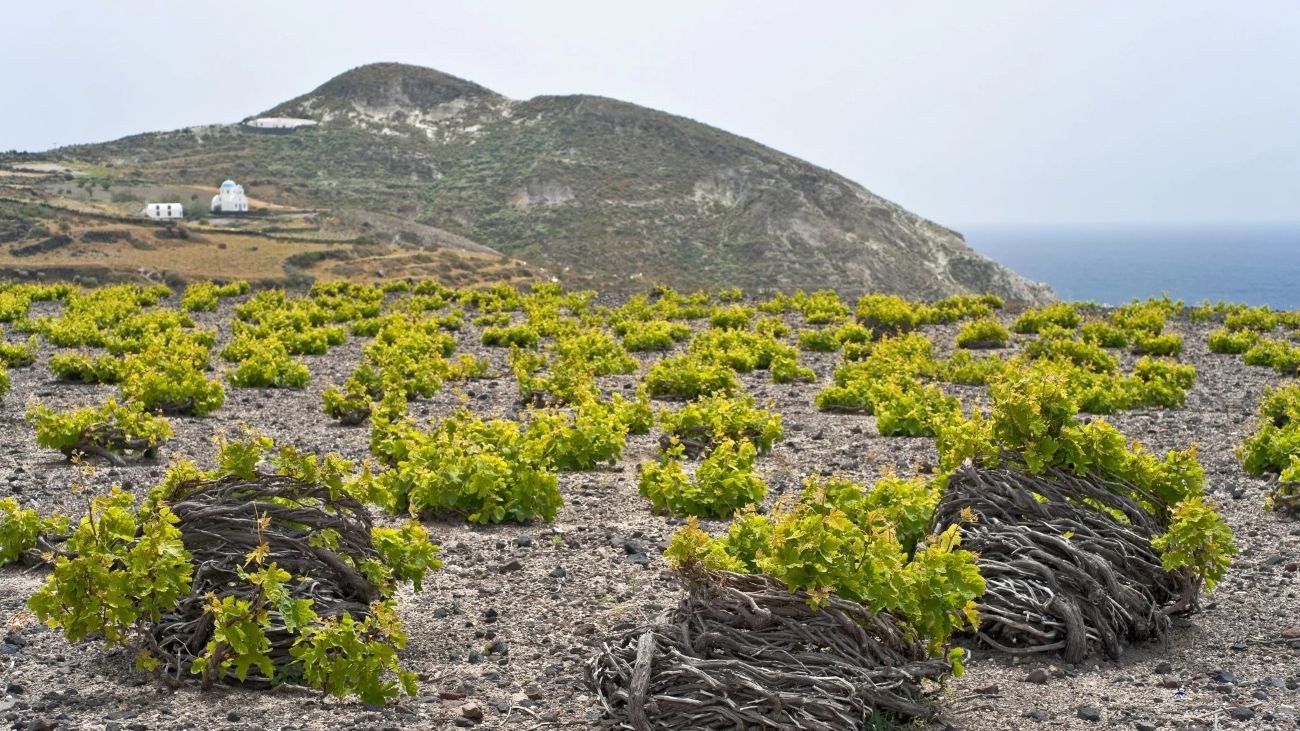
Santorini is an island in the southern Aegean, part of the Cyclades. Its wine history is extraordinary: there is evidence of vine-growing back in the 3rd millennium BC, and after the huge volcanic eruption (c. 1600 BC) the island’s terroir was totally transformed. Because the volcanic soils contain little to no clay, the vine‐killing phylloxera pest never established here, meaning some vines still have very old root systems.
Key grape varieties & wines
- Assyrtiko – the flagship white grape of Santorini. Bright acidity, strong minerality, citrus and wet‐stone notes. It thrives in the island’s arid, wind‐blasted, volcanic terrain.
- Athiri and Aidani – additional white varieties often blended with Assyrtiko, or used in sweet and special wines.
- Sweet style: Vinsanto – made from dried grapes (often Assyrtiko + Athiri/Aidani) in a passito style; amber-hued, rich, complex.
- Reds: lesser in volume but still present, e.g. Mavrotragano and Mandilaria, which produce deep, expressive reds on the volcanic soils.
Why it matters
Santorini is almost unique in its combination of ancient viticulture plus a very distinctive terroir (volcanic ash, extreme winds, minimal soil depth, basket‐trained vines lying low to the ground) which gives its wines a character that is unmistakably “place”. Today, wines from Santorini have a strong reputation globally, and are often sought by wine enthusiasts. For anyone interested in Greek wine the island is a must‐study.
-
Nemea (Peloponnese)

Location & history
Nemea is in the northeastern Peloponnese (Corinthia), one of southern Greece’s major wine regions. Its history goes back to antiquity. Archaeologists have uncovered ancient vineyards planted in trenches in the same area that later housed the sanctuary of Zeus. From the Ottoman records onwards the region was known for its “black wine of Nemea”.
Key grape variety & wines
- Agiorgitiko (sometimes spelled Aghiorghitiko) – by far the dominant variety in Nemea (≈80% of the plantings) and widely regarded as the premier red grape of southern Greece. It is versatile: it can produce fresh rosés, medium‐bodied reds, aged wines with structure, and even dessert wines.
- The soils in Nemea are varied (clay, stone, gravel, sand) and the vineyards occupy hillsides and valleys at different altitudes, giving the region a range of styles.
Why it matters
Nemea has been called “the Bordeaux of Greece” for the importance of Agiorgitiko and for the quality and prestige of its wines. For anyone exploring Greek reds, Nemea’s wines provide a great entry point — distinctly Greek in character yet able to age and evolve.
-
Naoussa (Macedonia, Northern Greece)

Location & history
Naoussa is situated in Central Macedonia, on the southeastern foothills of Mount Vermio. The vineyards lie at altitudes between roughly 80–350 m, benefiting from cool mountain air and clean springs. Historically, Naoussa was a major wine‐growing region; in 1905 the first Greek bottled red wine (“Naoussa Boutari”) was produced. And in 1971 the area was designated the first Greek PDO for wine (PDO Naoussa).
Key grape variety & wines
- Xinomavro (literally “sour black”) – the signature red varietal of Naoussa. Known for high acidity, firm tannin, and complex aromatics (often red cherry, dried tomato, herbs), often compared to Italy’s Nebbiolo.
- Its wines tend to have age‐worthy structure and express terroir strongly; the PDO rules mandate 100 % Xinomavro for Naoussa appellation wines.
Why it matters
Naoussa’s combination of high‐quality red wine, historic legacy, and the use of a truly indigenous grape variety make it one of Greece’s most important wine regions. Wine lovers seeking Greek reds with depth and character often turn to Xinomavro from Naoussa as a benchmark.
-
Attica (including Athens region)


Location & history
The Attica region, surrounding Greece’s capital Athens, has a wine‐growing tradition going back thousands of years. In fact, it supplied wines to Athens itself in ancient times.
Key grape varieties & wines
- Savvatiano – a white grape that dominates in Attica (≈80% of vineyards) and is historically linked with the pine-resin-flavoured wine known as Retsina.
- Roditis – another white variety common in Attica, used in rosé or light wines.
Why it matters
Although Attica might not always be the first region that comes to mind when one thinks “fine wine”, it has huge historical significance. The culture around Retsina may have made Greek wine infamous to some, but many winemakers in the region are now crafting fresh, clean whites and rosés from Savvatiano and Roditis that show how much Greek viticulture has advanced. For context and history, Attica is essential.
-
Some Other Noteworthy Mentions
While the four regions above provide a strong core for a historic‐and‐famous Greek vineyard tour, the wine map of Greece is far richer. A few additional regions & varieties worth mentioning:
- The Ionian Islands: islands like Cephalonia and Zakynthos avoided phylloxera, and grow varieties such as Robola (Cephalonia) and Verdea (Zakynthos).
- The Peloponnese (other parts): for example, around Patras in Achaia the variety Mavrodaphne (a fortified red) was historically important.
- Crete: the island has an extremely old tradition of viticulture (Minoan era) and houses unique local varieties like Vidiano (white) or Liatiko (red).
Bringing it all together: Why study these regions?
- Indigenous + Ancient
One of the greatest strengths of Greek wine is the abundance of indigenous grape varieties, many of which trace their lineage to ancient times. When you drink an Assyrtiko from Santorini, or a Xinomavro from Naoussa, you’re drinking something that is rooted in place and history in a way few other wine regions can claim.
- Terroir & Sense of Place
These regions illustrate how geography, climate and history co‐alesce: volcanic Santorini with its basket‐trained vines; mountainous Naoussa with cooling altitudes; Nemea’s clay/gravel mixtures and hillside slopes; Attica’s historic plains. Understanding the “why” behind the wines enriches the experience.
- Transition from Tradition to Modernity
Whether it’s the ancient trench-vineyards of Nemea or the phylloxera‐free old vines of Santorini, these regions carry deep tradition. Yet, in recent decades, innovation in viticulture and winemaking has elevated their global standing. For example, modern winemakers are rediscovering and reviving old varieties (Mavrotragano, etc.), practising organic viticulture, and targeting international wine markets.
- Wine Tourism & Cultural Experience
Visiting these places offers a combined experience: landscape, history, culture and wine. Many estates open to visitors; you can walk the vineyards, taste the terroir, learn the story. That makes them tremendous for anyone wanting more than a glass — wanting the story behind it.
Tips for Wine Lovers Visiting Greece
- Plan ahead: many wineries in more remote regions or islands require advance booking.
- Try local varietals. Avoid just looking for familiar international grapes; ask for Assyrtiko (Santorini), Xinomavro (Naoussa), Agiorgitiko (Nemea), Savvatiano (Attica) etc.
- Pair with local food. Greek terroir shines when brought together with local cuisine (seafood with Santorini whites; lamb or tomato-based dishes with Nemea reds; mezé style with Attica whites).
- Visit off-season if possible. While the islands get very crowded summer months, spring or autumn allow quieter vineyard visits.
- Explore old vines & special styles. For example the sweet Vinsanto of Santorini, or the age‐worthy Xinomavro reds, or even the historic fortified Mavrodaphne of Patras.
Final thoughts
Greek vineyards encapsulate a remarkable journey: from ancient viniculture (Amphorae, Dionysus, old traditions) through Ottoman and modern eras to a present where Greek grapes and terroirs are gaining well‐deserved recognition. Regions like Santorini, Nemea, Naoussa and Attica aren’t just “places that make wine” — they are live pages of wine history and culture.
Whether you’re a casual wine‐drinker curious about something new, or a serious oenophile seeking distinctive vineyard stories and varietals, exploring Greece’s historic vineyards offers a unique and rewarding path.
