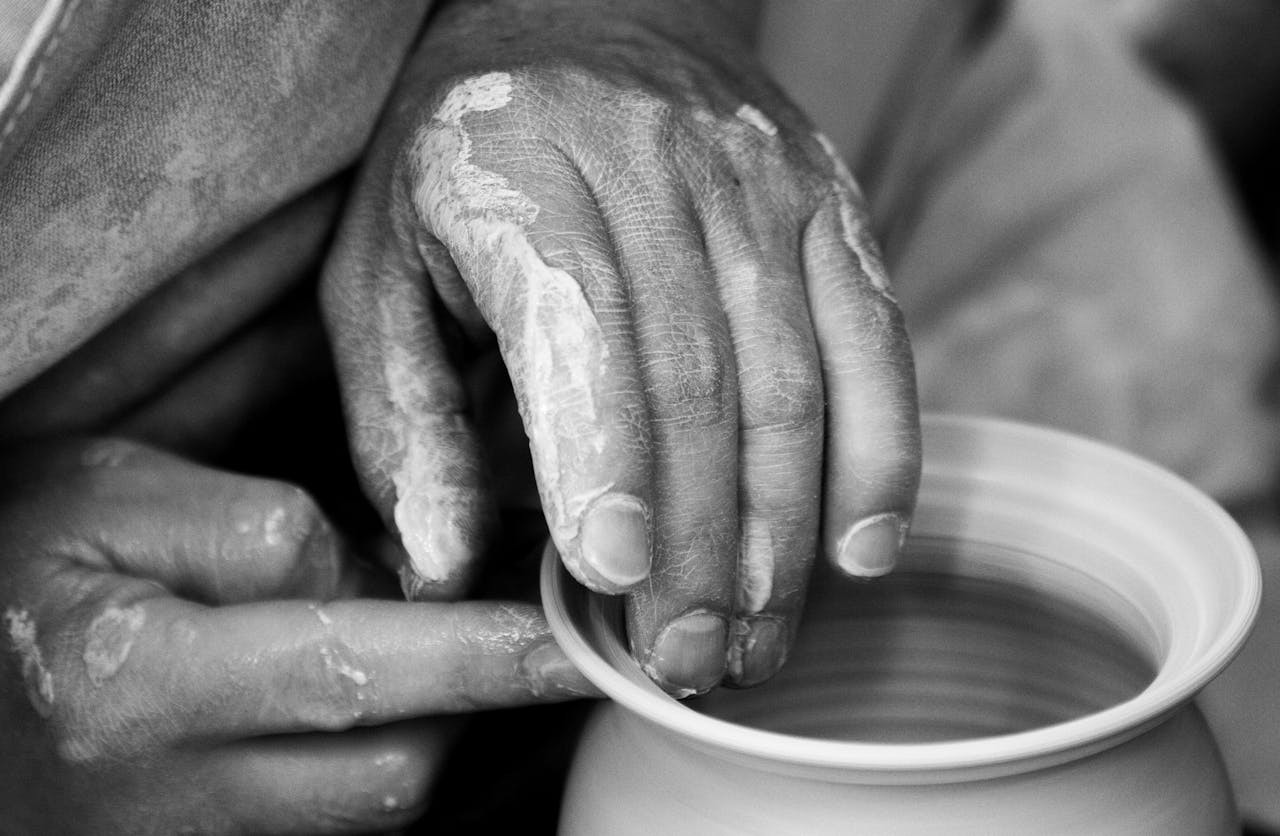

There’s something magical about holding a mug you made yourself — the gentle curve of the handle shaped by your own fingers, the glaze you chose, the tiny imperfections that make it truly yours. Pottery has a way of blending creativity with tactile satisfaction, and it’s no wonder people are falling in love with it again. But if you’ve ever scrolled through pictures of home studios and thought, “I don’t have a spare garage for that”, you’re not alone.
The truth is, you don’t need a huge, dedicated workshop to enjoy pottery. With a little planning, you can set up a functional pottery corner in your home, keep it manageable, and let it be as calming for your mind as it is expressive for your hands.
Why Pottery Is Worth Making Space For
Pottery isn’t just about making cups, bowls, or plant pots. It’s an antidote to the constant scroll of digital life. When your hands are deep in clay, you can’t check your phone. Your focus shifts to the texture, the form, and the slow transformation of a lump of earth into something beautiful and useful.
Working with clay engages both body and mind. The repetitive kneading, shaping, and smoothing can be as meditative as yoga, while the unpredictability of the kiln keeps things exciting. Many potters describe a sense of groundedness — literally and figuratively — after a session. It’s a hobby that’s as good for your nervous system as it is for your kitchen cupboard.
Starting Small: What You Really Need
When beginning pottery at home, the temptation is to buy all the gear. But if you’re trying to save space and money, focus on a few essentials.
Clay
For beginners, air-dry clay or low-fire earthenware is a great start. Air-dry clay doesn’t require a kiln, meaning you can avoid the biggest space (and budget) hurdle. It’s perfect for small decorative pieces or practice. If you do want functional ceramics for food use, you’ll eventually need clay that can be fired, but you can start with community kiln services before investing in your own.
Basic Tools
A simple toolkit is enough: a wire clay cutter, a few wooden modeling tools, a needle tool for scoring, and a sponge for smoothing. Many starter sets are no bigger than a pencil case.
Work Surface
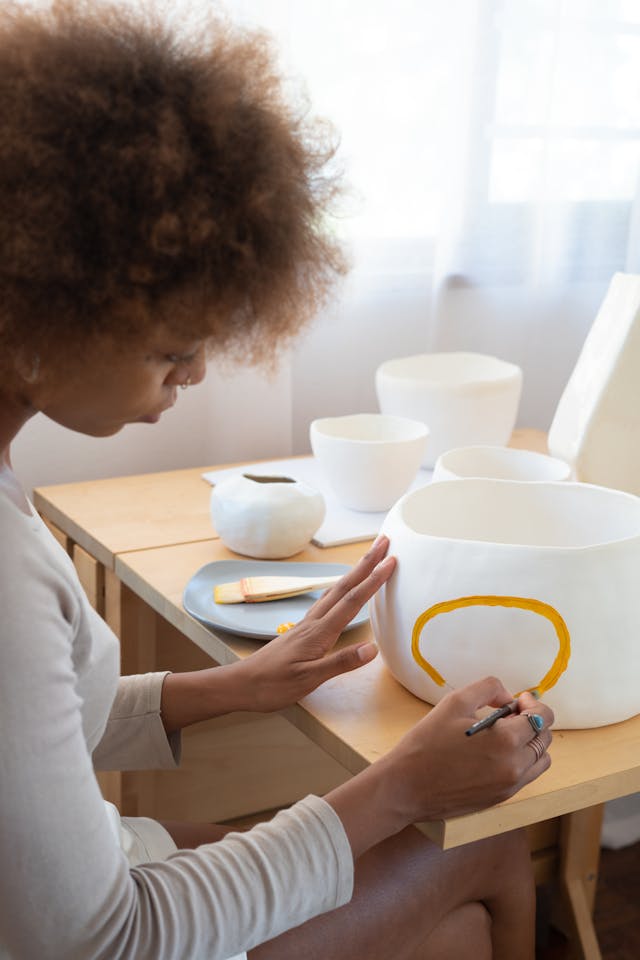
Your kitchen table can double as your pottery bench — just cover it with a large board, a canvas cloth, or even a cheap vinyl tablecloth. Canvas is ideal because it stops clay from sticking and can be folded away when you’re done.
Storage
Clay is best kept airtight, so you’ll need a couple of sturdy plastic bins or sealable bags. Finished pieces can be stored on a shelf or in a cabinet until they’re ready for firing. Keeping everything in a single portable container helps you reclaim your space quickly.
Setting Up Your Space Without Losing Your Living Room
The trick to fitting pottery into your home is to make your setup flexible. Think of it as a pop-up studio: easy to bring out, easy to put away.
A folding table or a large tray board over your dining table can serve as your workstation. When you’re finished, wipe down the surface, store your tools in a small bin, and tuck it into a closet.
If you want to use a pottery wheel, look for a compact tabletop model. They’re quieter, lighter, and can fit in a storage cabinet when not in use. For clean-up, a simple bucket of water works better than rinsing clay directly down your sink (which can clog pipes). A small sponge and a microfiber cloth will keep surfaces clay-free.
Ventilation is helpful but not essential for hand-building and air-dry projects. If you move into glazing and firing, that’s when you’ll want to use well-ventilated areas or rely on a local kiln service.
Finding a Firing Solution Without a Kiln at Home
Kilns are wonderful, but they’re big, heavy, and get extremely hot — not exactly something you stash under the bed. If you’re just starting, see if there’s a community arts center, school, or local pottery studio offering “firing services” where you pay per piece. Some even let you drop off your work for both bisque and glaze firing.
This way, you can enjoy the full pottery process without committing to the largest piece of equipment. Once you’re truly hooked and have the space, you can consider a small kiln — but for many home potters, outsourcing firing remains the easiest option.
How Pottery Helps the Mind and Melts Stress
Clay has a way of slowing time. The tactile feedback, the earthy smell, and the gradual transformation engage your senses and quiet your thoughts. Studies have shown that working with your hands can lower cortisol levels, helping your body exit “stress mode.”
Pottery also encourages what psychologists call “flow” — a state where you’re so absorbed in the process that you lose track of time. In this state, your brain releases dopamine, which boosts mood and creativity.
For people who feel restless or anxious, the repetitive actions of wedging clay, coiling, or smoothing can be grounding. It’s a bit like kneading bread dough — except instead of eating the result, you might drink coffee from it for years.
And perhaps most importantly, pottery teaches patience. Clay cracks if rushed, glaze needs time to dry, and firing can’t be hurried. In a world obsessed with instant results, this slow pace can be surprisingly therapeutic.
Keeping It Manageable
One of the best ways to keep pottery from taking over your home is to set physical limits: a single shelf for supplies, a box for tools, and one flat surface for working. This way, your hobby remains joyful rather than overwhelming.
It’s also worth pacing your projects. It’s tempting to start five pots at once, but finishing each piece — from shaping to drying to glazing — feels far more satisfying than a pile of half-made clay lumps.
If you live with others, be mindful of clay dust and mess. A quick sweep or vacuum after each session keeps everyone happy and avoids gritty surprises underfoot.
Let Your Hobby Grow at Its Own Pace
Pottery doesn’t have to be an all-or-nothing commitment. You can begin with air-dry clay at your kitchen table, slowly pick up tools as you need them, and use community resources for the parts you can’t do at home.
Over time, you might upgrade to a wheel, rent kiln space more often, or even dedicate a corner of your home to the craft. But there’s no rush. The beauty of pottery is in the process, not just the end product.
In the end, your little pottery corner can become more than just a hobby station. It can be a place where the noise of life fades, where your hands move with quiet intention, and where the simple act of shaping clay shapes you in return.
