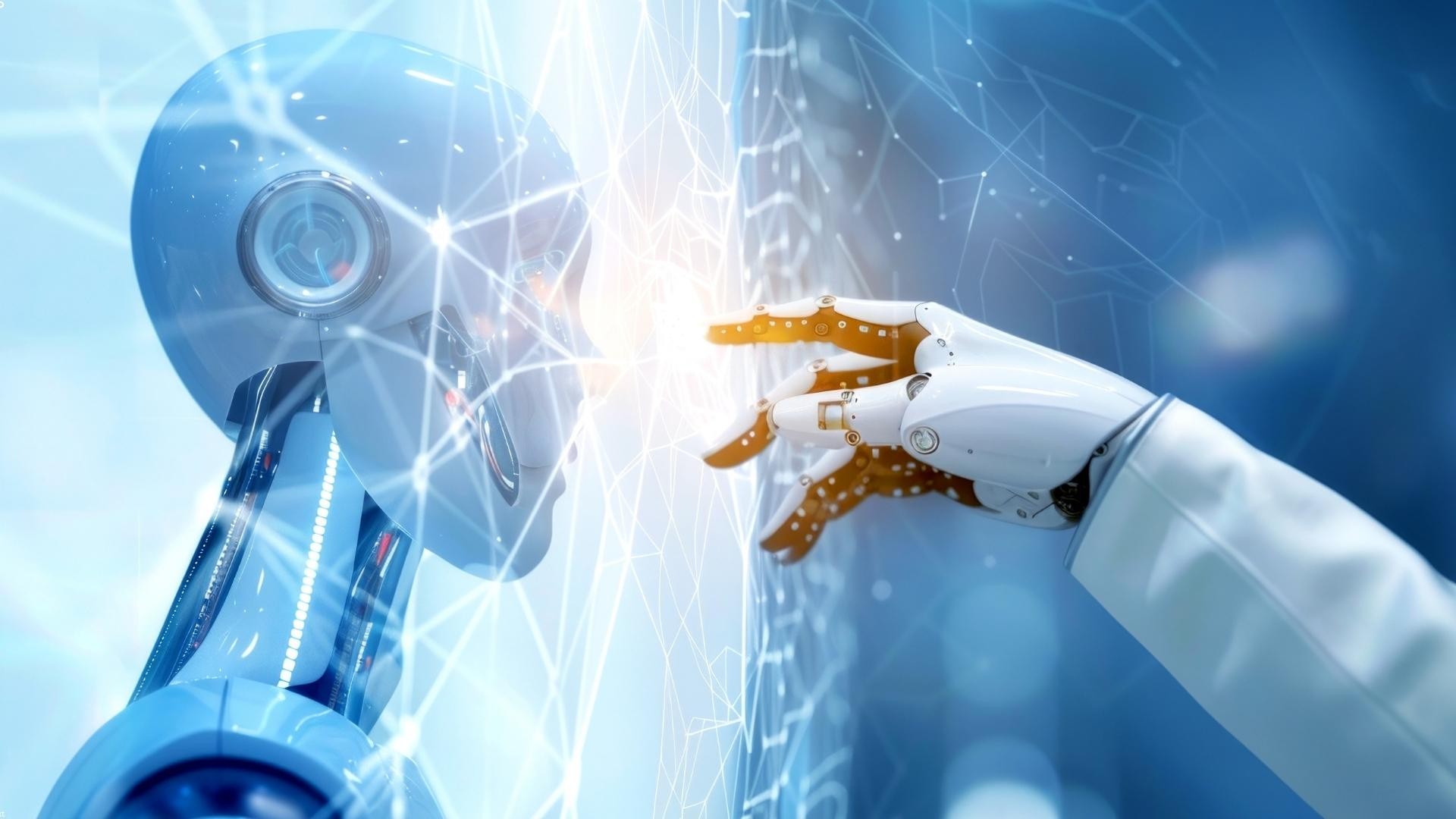

If 2023 was the year everyone started experimenting with AI, 2025 is the year it officially joined the team. Artificial intelligence no longer feels like a futuristic experiment or a novelty tucked inside your favorite app. It has become part of the everyday workflow, sitting quietly in the background of meetings, writing summaries, scheduling follow-ups, and occasionally producing a better idea than the humans in the room.
At first, it was amusing. Someone opened ChatGPT on their laptop to “help” draft an email. Someone else used it to polish slides for a presentation. Fast forward two years, and the AI is now a full-time participant. It writes proposals, suggests pricing models, edits press releases, and occasionally gets credit for creative ideas. The joke that “AI is my coworker now” has stopped being a joke.
From Tool to Teammate
The shift from AI as a digital helper to AI as a workplace presence happened faster than anyone expected. Businesses that once viewed automation as optional now see it as essential. Startups use it to scale faster, agencies rely on it for research, and freelancers treat it as a creative sounding board. In just a few years, AI moved from the margins of business to the middle of every conversation.
The new generation of AI tools does not just answer questions. They collaborate. They remember context, track projects, and generate drafts that sound remarkably human. A single assistant can now handle what used to require an entire marketing team: trend analysis, copywriting, scheduling, and even client engagement. The workplace has never felt so productive, or so quietly surreal.
This collaboration comes with an unexpected side effect — human employees have started to mirror the machine. Meetings are shorter, communication is cleaner, and data-driven decision making has replaced intuition in places where creativity once ruled. The workplace is faster and more efficient, but it also feels different. More digital, less spontaneous.
When AI Speaks Up in the Meeting
One of the most fascinating developments of 2025 is the rise of real-time AI participation. Imagine a brainstorming session where a voice assistant listens, transcribes, and contributes live. It references past projects, pulls up data, and even reminds everyone that the same idea failed three years ago in a different market. At first, people found it intrusive. Now, it feels normal.
AI’s growing confidence in conversation has changed how people prepare for meetings. When a machine is taking notes and tracking ideas, there is little room for bluffing. The AI knows the numbers, the dates, and the history of every decision. It never forgets. That can be both comforting and terrifying.
Still, many professionals admit that the presence of AI has made them sharper. With a tool that remembers everything, people are focusing on what the machine cannot do: empathize, persuade, and think laterally. The division of labor has become philosophical. Humans imagine. Machines refine. The two dance in an awkward but oddly functional partnership.
The Business of Efficiency
The reason AI has stuck around is simple: it works. Companies save time and money by delegating repetitive tasks to algorithms. Reports that took a week now take minutes. Customer support runs twenty-four hours a day with polite chatbots that never take coffee breaks. Even HR departments use AI to screen resumes and schedule interviews. The result is a leaner, faster, and more data-savvy business world.
Yet, this new efficiency has raised familiar questions. What happens to the human side of work when algorithms do the routine thinking? Managers are beginning to realize that productivity alone is not enough. A business can be efficient and still feel empty. The challenge now is not about adopting AI but integrating it in a way that preserves creativity and culture.
The companies doing it right treat AI as an amplifier, not a replacement. They use it to free employees from digital clutter so that people can focus on strategy and relationships. It is not about removing humans from the process, but about helping them think more clearly.
The Emotional Side of Automation
For many workers, the arrival of AI at the meeting table has been both thrilling and unsettling. Some feel empowered. Others feel watched. The same tool that summarizes your ideas can also measure how many you had, how long you spoke, and whether your suggestions were useful. The line between assistance and surveillance is getting thinner every month.
This emotional complexity is shaping a new workplace culture. Some teams treat AI as a neutral helper. Others treat it like an invisible colleague that needs to be managed. Meetings now start with phrases like “Let’s ask the AI what it thinks” or “Can you summarize this for the record?” AI has become part of the social fabric, a quiet but constant presence in the flow of human conversation.
There is also a new etiquette forming around it. People have learned to “speak for the transcript,” knowing that their words will be summarized and analyzed later. The machine is always listening, and in some ways, always learning who you are.
Creativity in the Age of the Machine
Ironically, as AI takes over repetitive work, creativity is becoming more valuable. With data and content generation handled by algorithms, the most sought-after skill in business is imagination. The ability to think sideways, connect unrelated ideas, and surprise both clients and computers has become the new superpower.
The best teams use AI as a creative partner. Writers use it to overcome blocks. Designers use it to prototype faster. Analysts use it to spot trends they would never have noticed. The machine becomes a collaborator, not a competitor. It is there to make you sharper, not smaller.
In this new era, creative professionals are learning to speak the language of prompts, tone, and context. They are not coding the machine. They are conversing with it. The most effective workers in 2025 are not necessarily the most technical ones. They are the ones who know how to talk to AI and get exactly what they need.
The Future Meeting Room
As businesses continue to evolve, one thing seems clear: AI is not leaving the meeting. It will only become more present, more personalized, and more intertwined with daily work. Soon, AI tools will not just listen to your ideas but simulate outcomes, calculate risks, and model financial impacts before anyone leaves the room.
That level of insight is powerful, but it also demands balance. The future of work will not belong to the most advanced algorithm or the fastest system. It will belong to the humans who can use these tools thoughtfully — people who understand that progress without perspective is just noise.
AI has made work faster, but it is still up to people to make it meaningful. The best teams of tomorrow will be those that treat AI not as a replacement for human thought but as a reflection of it.
The Meeting Never Ends
So yes, AI got invited to the meeting, and it refused to leave. It learned the agenda, took notes, suggested action items, and by the time everyone left, it had already scheduled the next one. It is efficient, tireless, and maybe a little too eager. But it is also a reminder that technology is only as valuable as the people who use it.
The smartest workplaces will not try to outthink the machines. They will do what humans do best — adapt, imagine, and laugh at the absurdity of working alongside a colleague who runs on electricity and never needs a coffee break.
Because in the end, the future of work is not about humans or machines winning. It is about learning to sit at the same table and get something meaningful done together.
