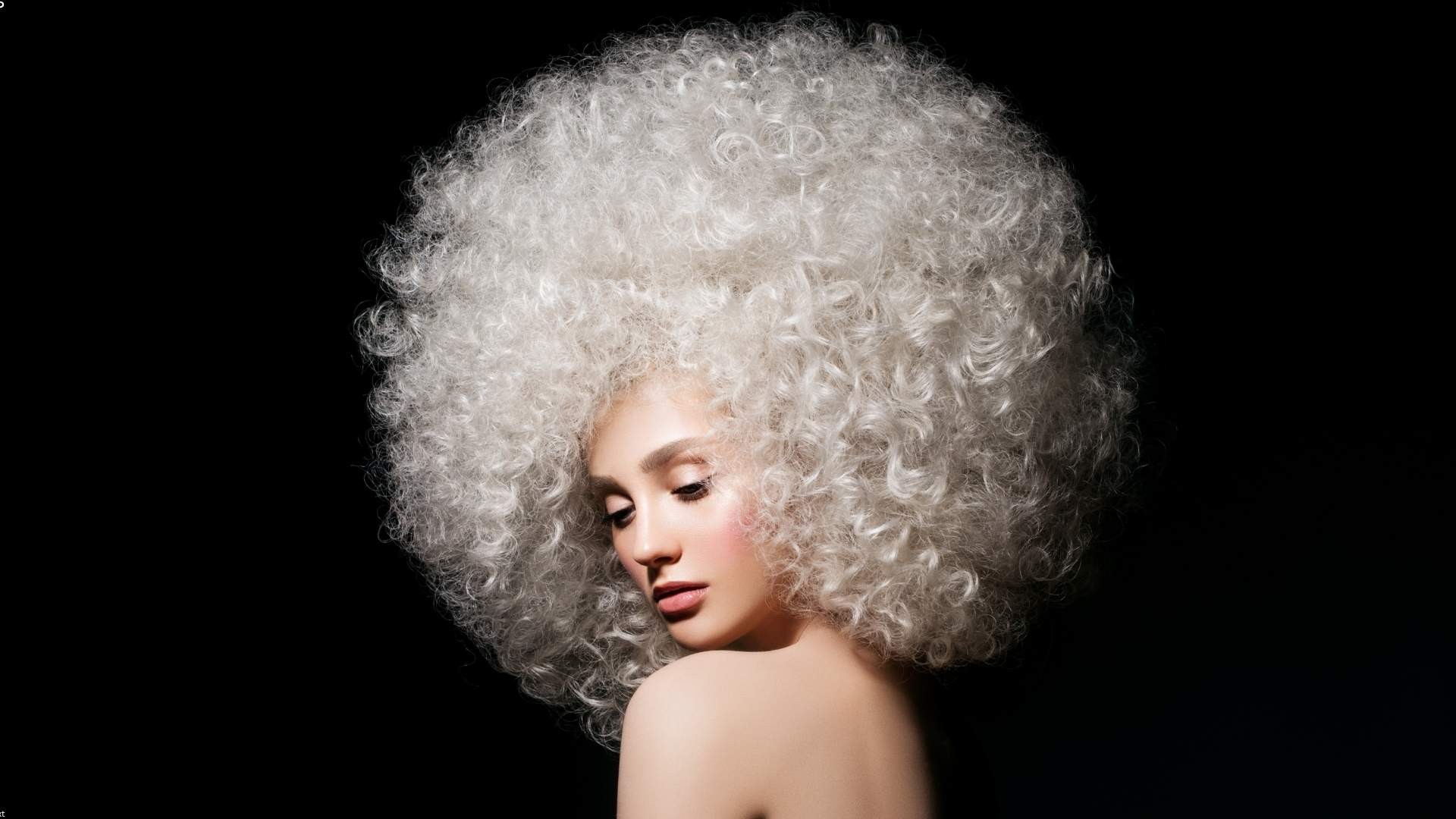

Throughout history, hair has never been just hair. It has been a crown, a statement, and sometimes a political act. From towering powdered wigs in Versailles to the razor-sharp bobs of the 1920s, the story of hair is also the story of power, rebellion, and beauty. Every curl and braid has carried meaning — social, spiritual, or scandalous.
Fashion historians often say that the higher the hair, the closer to influence, and there is truth in that. Across centuries, people have built entire identities out of their hair, crafting silhouettes that defined eras. Some styles symbolized wealth and luxury, others defiance and independence. All of them were extra, and proudly so.
Ancient Luxury and Symbolic Strands
Let us start in ancient Egypt, where hair was treated as both decoration and devotion. Wealthy Egyptians wore elaborate braided wigs coated in fragrant oils and beeswax. Gold dust and lapis lazuli beads were woven into the strands to signal status and spiritual favor. Both men and women shaved their heads to wear wigs that represented purity and perfection, a custom that blurred the line between beauty and ritual.
In ancient Greece, curls were the language of divinity. Gods were painted with perfect ringlets, and Athenian women mimicked them using heated bronze rods — a precursor to the modern curling iron. Meanwhile, in Rome, elaborate braids and towering knots became the fashion of empresses. Each strand was pinned to perfection, signaling not only wealth but also access to personal slaves and hairdressers. Hair was not only beauty; it was logistics.
The Renaissance and the Art of Drama
By the Renaissance, hair had become an extension of art itself. Italian women dyed their locks strawberry blond using saffron and sunlight, a process that could take days of sitting on balconies with hair spread across wide-brimmed hats. The result was ethereal, golden hair that reflected divine light in portrait paintings.
Queen Elizabeth I took that drama and magnified it. Her iconic flame-red curls, stiffly arranged under jeweled headdresses, were more than vanity. They were branding. Her fiery hair became a national symbol of English power and independence. Courtiers copied her look with wigs dusted in orange powder, signaling loyalty to the crown and a willingness to suffer for fashion.
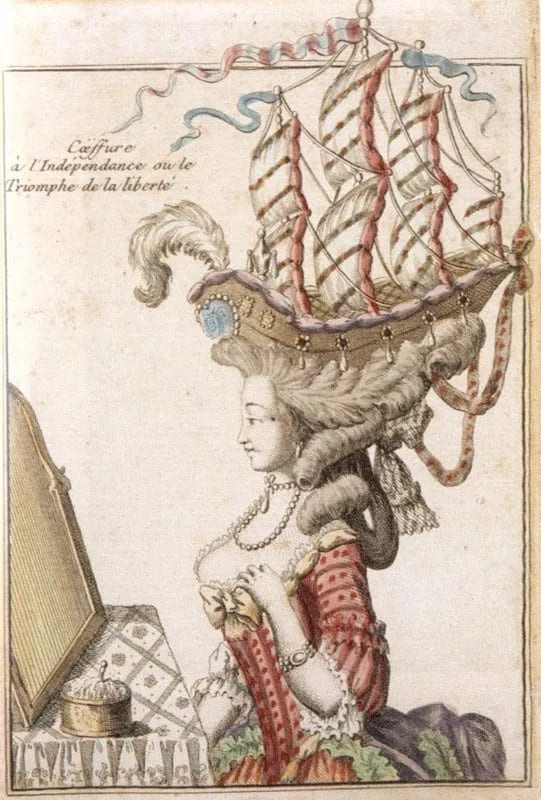
The Versailles Era: Where Hair Defied Gravity
Then came 18th-century France, where subtlety was left at the door. The court of Louis XVI and Marie Antoinette turned this into architecture. Ladies of the court wore towering poufs that could reach half a meter high, constructed with horsehair, wire frames, and layers of powder. Hair became a physical expression of excess and influence.
Marie Antoinette’s hairdresser, Léonard Autié, was the celebrity stylist of his day. He built entire scenes into hairstyles — ships, gardens, even tiny model windmills. Women slept sitting up to preserve these creations, and parasols were redesigned simply to fit under their coiffures. Extravagance became political theater. To have monumental hair was to declare that you were part of the spectacle of power.
Ironically, those same powdered wigs would later symbolize the downfall of the aristocracy. When revolution came, the hair that once crowned royalty became a reminder of inequality. The guillotine ended not just lives but an entire aesthetic era.
The 19th Century: From Empire to Elegance
After the chaos of revolution, the 19th century brought restraint — at least in theory. Hair became softer, more romantic, but still just as intentional. Women in the Regency era wore loose curls inspired by Greek statues, echoing a desire for classical beauty and order.
As the century progressed, the Victorian age redefined femininity through hair. Long, glossy locks became a moral symbol of virtue and purity. Women brushed their hair nightly with a hundred strokes and kept it covered during the day. Hair jewelry, made from the locks of loved ones, turned sentiment into ornamentation. The Victorians found a way to make even mourning fashionable.
The 20th Century: Power Cuts and Cultural Revolutions
When the 20th century arrived, women started cutting away history — literally. The bob became a rebellion. Flappers of the 1920s chopped off their long hair, shocking society but signaling freedom from corsets, conventions, and control. The short haircut was more than a trend; it was independence with bangs.
In the 1940s, waves and victory rolls defined an era of resilience. Women working in factories during World War II needed practicality, yet they managed to turn functionality into style. The pinned curls became symbols of strength and glamour in one.
Then came the 1960s, where hair exploded again. Beehives, bouffants, and Beatles haircuts redefined youth culture. Jackie Kennedy’s smooth helmet-style hair became an icon of elegance, while Brigitte Bardot’s tousled volume rewrote the rules of sensuality. Hair was communication — neatness meant authority, messiness meant freedom.
The 1970s turned rebellion into liberation. Natural afros, long hippie waves, and punk spikes all fought the same battle in different languages. Hair became political again. The afro was a declaration of pride, while punk’s sharp colors and mohawks screamed protest. The scalp was now a billboard for identity.
By the 1980s, volume returned with a vengeance. Big curls, bold colors, and teased roots reigned supreme. Hairspray was the decade’s perfume. The bigger your hair, the bigger your confidence. Madonna, Tina Turner, and Grace Jones turned it into art.
Modern Glamour: Freedom in Every Strand
Today, history repeats itself — just with better conditioner. Hair has once again become a symbol of self-expression, though this time the power lies in choice. Straight or curly, natural or neon, short or flowing, anything goes.
K-beauty and global wellness trends have redefined hair care as self-care. Serums, scalp toners, and lightweight oils emphasize health over perfection. Meanwhile, red carpets and social media show a mix of everything: blunt bobs next to Rapunzel waves, buzzcuts next to microbraids. For the first time in centuries, no single style defines beauty.
Still, the echoes of history remain. Every time someone teases their roots, dyes their hair pink, or adds extensions for drama, they join a centuries-long conversation about expression and individuality. Hair continues to be our loudest quiet statement — a way to be seen before we even speak.
A Legacy That Lives in Every Hair Flip
Looking back, one thing is clear: hairstyles have always been more than fashion. They are social language, identity, and art. From pharaohs to flappers, queens to pop icons, hair has shaped how the world sees power, freedom, and allure.
So the next time you spend too long with a curling iron or risk humidity for volume, remember that you are part of that legacy. The same drama that crowned empresses and inspired revolutions lives on in every modern blowout and braid.
Hair may not rule the world anymore, but it still knows how to make an entrance.

